

More and more people in the United States are using dry needling therapy to alleviate muscle discomfort, sports injuries, and long-term stress. A lot of individuals hear about it at physical therapy clinics but don’t know what it really is.
This article will tell you what dry needling therapy is, how it works, its benefits, possible hazards, how much it costs in the US, and how it compares to acupuncture.
What Is Dry Needling Therapy?
Licensed physical therapists and other healthcare professionals utilize dry needling therapy, a new therapeutic method, to ease muscular pain and make it easier to move.
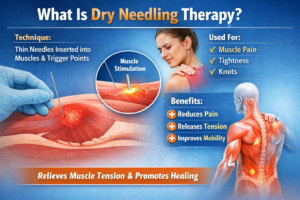
It includes putting small, clean needles into trigger points, which are tight knots or bands in muscles. These trigger points can make you hurt, stiff, and limit how far you can move.
Dry needling doesn’t involve injecting anything, unlike medication-based injections. The needle itself makes the muscle relax and lets more blood flow.
How Does Dry Needling Work?
Dry needling works on myofascial trigger points. When the needle goes into a tight muscular knot, it makes the muscle quiver a little. This answer helps:
- Loosen up stiff muscles
- Lower inflammation
- Make blood flow better
- Send fewer pain impulses to the brain.
The goal is to make the muscles work normally again and make the pain go away.
Conditions Treated with Dry Needling
People in the US often use dry needling therapy for:
Long-Term Pain in the Neck and Back
Long periods of sitting or bad posture can cause muscle tension that lasts for a long time.
Injuries from sports
Athletes utilize dry needling to help their muscles heal faster after they have been strained or overused.
Pain in the shoulder
Conditions like rotator cuff stiffness and frozen shoulder can benefit from trigger point release.
Headaches and Migraines
Tension headaches are commonly caused by tight muscles in the neck and upper back.
Sciatica
Dry needling can help relieve muscle tightness that bothers the sciatic nerve.
Benefits of Dry Needling Therapy
There are a number of benefits to dry needling:
Fast Pain Relief
Many patients say they feel better after just one or two sessions.
Improved Range of Motion
When you let go of stiff muscles, you can move and bend more easily.
Faster healing from injuries
When used alongside physical therapy activities, it helps with rehabilitation.
Less Muscle Spasms
It helps relax muscles that are too active and create pain.
Is Dry Needling Safe?
Most people think that dry needling is safe when done by a competent and licensed specialist.
Side Effects That Happen a Lot
- A little bit of pain
- A little bruising
- Fatigue that comes and goes
These symptoms normally go away in 24 to 48 hours.
Who Should Avoid Dry Needling?
- People who have bleeding problems
- People who take blood thinners
- People who are afraid of needles
- Pregnant women (talk to a doctor first)
Always talk to a doctor before commencing treatment.
Dry Needling vs Acupuncture
A lot of people think that dry needling and acupuncture are the same thing, but they are not.
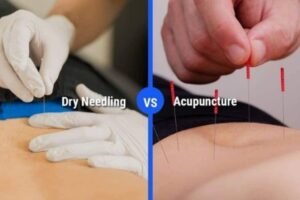
Dry Needling
- Based on the rules of Western medicine
- Concentrates on muscular trigger points
- Mostly used for pain and physical therapy
Acupuncture
- Based on the principles of Traditional Chinese Medicine
- Concentrates on Qi, or energy flow
- Used for overall wellness and various health concerns
Both employ small needles, but their ideas about how to treat people and what they want to achieve are different.
How Much Does Dry Needling Cost in the US?
In the US, dry needling therapy usually costs between $40 and $100 per session, depending on where you go and what clinic you choose.
If it is part of a physical therapy program, certain insurance plans may pay for it. Before you make an appointment, it’s wise to check with your provider.
What to Expect During a Session
A normal session lasts between 20 and 40 minutes.
- The therapist checks your pain and how well you can move.
- Needles that have been cleaned are put into trigger points.
- You might feel a quick twitch or a little pain.
- After therapy, you may be told to do some gentle stretching or exercise.
Most people can go back to their routine activities the same day.
Final Thoughts
In the United States, dry needling therapy is becoming more and more popular as a way to alleviate muscle discomfort, sports injuries and long-term tension. When done by a trained specialist, it can give quick relief and make it easier to move around.
If you have muscle discomfort that won’t go away and typical therapies haven’t worked, you might want to talk to your doctor about dry needling.

[…] Dry Needling Therapy: What to Expect, Benefits, Side Effects, and Cost […]
Dry Needling Therapy uses thin needles to target muscle trigger points. It helps relieve pain, reduce stiffness, and improve mobility. Side effects are usually mild, like soreness or bruising. A session typically costs $40–$100, and results are faster recovery and better muscle function.